

Image by AIG
Life Insurance and the Financial Risk Spectrum
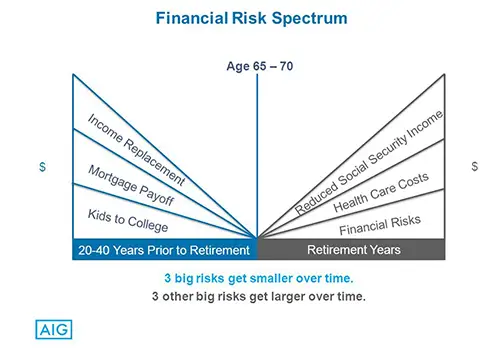
The graphic from AIG demonstrates how financial risks change throughout different stages of life. As priorities shift from raising a family to preparing for retirement, your financial strategy should evolve as well. Life insurance can play an important role in helping protect loved ones, preserve savings, and support long-term financial goals.
Understanding the Financial Risk Spectrum
Throughout life, people face different financial responsibilities and risks. During the early and middle years, the focus is often on protecting income and providing for loved ones. As retirement approaches, priorities shift toward preserving assets, generating retirement income, and preparing for future healthcare expenses.
Understanding these changing risks can help you make informed decisions about the type of life insurance and financial planning strategies that best fit your stage of life.
Pre-Retirement Years
During an individual’s pre-retirement years, there are three major financial risks that generally decrease over time:
- Income replacement
- Mortgage payoff
- College expenses for children
Pre-retirement consumers are typically raising families while building financial assets such as a home, retirement accounts, and emergency savings. During this stage, protecting income is often one of the most important financial priorities. If the primary wage earner were to pass away unexpectedly, the financial impact on the family could be significant.
Term life insurance can help provide financial security by replacing lost income, helping cover outstanding debts, and allowing loved ones to continue working toward long-term financial goals.
Financial Planning Before Retirement
Life insurance is only one piece of a strong financial plan. As retirement gets closer, experts recommend reviewing your overall financial picture regularly. This includes evaluating retirement savings, estimating future expenses, reviewing insurance coverage, and updating beneficiary designations.
A retirement checklist can help you determine whether you are contributing enough to retirement accounts, paying down debt, creating an emergency fund, and planning for healthcare expenses that may arise later in life. Taking these steps early gives your investments more time to grow while reducing financial stress as retirement approaches.
Meeting with a financial professional can also help identify gaps in your retirement strategy and determine whether your current savings, insurance coverage, and investment approach align with your retirement goals.
Replenishing the Bucket
Life insurance provides financial support that loved ones may need after the death of an insured family member.
For example, families with young children may need funds to pay for education, while a surviving spouse may need income to continue paying the mortgage or other household expenses. Life insurance helps replace lost income and allows surviving family members to continue meeting their financial obligations.
As Enrique Torres, Empower’s Life Product Specialist, explains, life insurance helps “replenish the bucket” for the surviving spouse by providing financial resources when they are needed most.
Post-Retirement Years
As retirement begins, the financial risks change. Three major concerns often become more significant over time:
- Healthcare costs
- Reduced income after leaving the workforce
- Financial risks that can impact retirement savings
Healthcare expenses often increase with age, while income may become more dependent on Social Security, pensions, retirement accounts, and personal savings. Market volatility, inflation, and unexpected expenses can place additional pressure on retirement income.
Without proper planning, these challenges can reduce retirement savings faster than expected and may create financial burdens for family members.
The Role of Permanent Life Insurance
Permanent life insurance offers protection throughout an individual’s lifetime while also building cash value over time.
Cash value represents the portion of premiums that accumulates within the policy after insurance costs have been paid. Depending on the policy and its terms, this value may be available through loans or withdrawals and can become another financial resource during retirement.
For some individuals, permanent life insurance can complement other retirement income sources by providing additional financial flexibility while also leaving a death benefit for beneficiaries.
Building a Retirement Strategy
Retirement planning involves much more than saving money. A comprehensive strategy should include:
- Estimating retirement income needs
- Maximizing retirement account contributions when possible
- Reviewing Social Security claiming strategies
- Planning for healthcare and long-term care expenses
- Updating estate planning documents and beneficiary designations
- Reviewing life insurance coverage as financial needs change
Regularly reviewing your financial plan allows you to adjust your strategy as life changes and helps ensure your retirement goals remain on track.
The Bottom Line
Financial risks change throughout every stage of life. During your working years, life insurance can help protect your family’s income and financial future. As retirement approaches, it can become part of a broader financial strategy that supports wealth preservation, retirement income planning, and legacy goals.
Working with a licensed insurance agent and financial professional can help you evaluate your changing needs and build a strategy designed to protect both your loved ones and your long-term financial future.
Life Insurance Questions?
We hope that this information on Financial Risk Life Spectrum is useful to you. If you want to learn how you save on your health insurance read our article Cut Costs With Smarter Health Coverage.
If you’d like to learn how we can help you plan your retirement, call Empower Brokerage at (888) 539-1633 to speak to one of our Life and Annuity experts or leave a comment down below.
Get affordable life insurance quotes by clicking here.
See our other websites:
This article was updated on July 16, 2026.